Skip to content

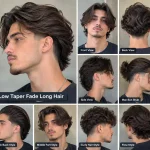
A low taper fade long hair haircut gives you a clean look while keeping your hair long on top. The taper starts near the ears and neckline. The hair becomes shorter as it moves down, while the top keeps its length and shape.
This haircut works with straight, wavy, curly, and coily hair. You can wear a slick back, middle part, curtain fringe, man bun, braids, or a natural flow.
In this guide, you will learn about the best low taper fade long hair styles, hair types, fade choices, styling products, and barber tips.
What Is a Low Taper Fade with Long Hair?

A low taper fade makes the hair shorter around the ears and neckline. The change in length starts low, so the sides keep more hair than a high taper.
The hair on top can stay long, thick, fluffy, or textured. Your barber can blend the sides into the top for a smooth finish.
A low taper fade long hair male haircut works well for casual days, school, work, and special events. You can also change the top style without changing the basic taper.
Best Low Taper Fade Long Hair Styles
There are many ways to wear long hair with a low taper fade. Your choice can depend on your hair type, face shape, and daily routine.
Low Taper Fade with Long Hair on Top
This style keeps the top long while the sides and neckline stay neat. You can wear the hair loose, brush it back, or part it to one side.
It is a good choice if you want to keep your length without making the haircut look untidy.
Low Taper Fade Long Hair Slick Back
A slick back moves the hair away from the face. It can work with straight or wavy hair.
Use a small amount of styling cream, pomade, or molding paste. Comb the hair back without making it look too stiff. A matte clay can give a softer finish, while a high-shine pomade creates more shine.
Low Taper Fade with a Middle Part
The middle part divides the hair into two sections. The hair falls on both sides of the face, while the low taper keeps the lower sides neat.
This style can work well with straight and wavy hair. A curtain hairstyle or curtain fringe can add more shape around the face.
Low Taper Fade with Long Hair Flow
A flow hairstyle lets the hair move naturally. It works well with medium or long hair that has enough length to fall around the head.
Ask your barber to keep the front and top long. Soft layers and textured ends can help the hair move without removing too much length.
Low Taper Fade with a Quiff
A quiff lifts the front of the hair. It adds height and shape to the top while the taper keeps the sides clean.
A blow dryer and a round brush can help lift the front. Use a small amount of styling product to keep the shape in place.
Low Taper Fade with a Pompadour
A pompadour has a raised front and a smooth top. It can create a classic look when paired with a low taper fade.
This style often needs more styling time than a natural flow. A blow dryer and pomade can help shape the hair.
Low Taper Fade with a Comb Over
A comb over moves the top hair to one side. It can look neat for work, formal events, or everyday wear.
You can choose a soft side part or a clear hard part. Ask your barber which option fits the amount of hair you want to keep.
Low Taper Fade with a Textured Crop or Fringe
A textured crop has short, shaped hair at the front. A fringe falls toward the forehead.
These styles usually work best when the top is shaped to suit the chosen look. If you want to keep very long hair on top, ask for a longer fringe instead of a short crop.
Undercut Low Taper Fade Long Hair
An undercut creates a stronger difference between the long top and shorter sides. A low taper fade gives a softer blend near the ears and neckline.
You can ask for an undercut-inspired shape with a low taper finish. Explain how much contrast you want before the barber starts cutting.
Low Taper Fade with a Mullet or Wolf Cut
A mullet keeps more length at the back, while the sides are shorter. A taper-fade mullet combines that shape with a cleaner finish near the ears and neckline.
A wolf cut uses layers to create a fuller, more relaxed shape. Both styles can be changed to suit your hair length and texture.
Low Taper Fade Long Straight Hair
Straight hair can work with a middle part, slick back, side part, comb over, or long flow.
For a low taper fade long hair straight hair style, ask your barber to preserve the top length and shape the ends only where needed. Straight hair can show uneven cuts, so explain whether you want a smooth finish or soft layers.
A low taper fade long hair male straight hair style can look simple and neat without removing the length you want to keep.
Low Taper Fade Long Curly Hair

Curly hair adds natural shape and volume. The curls stay on top while the lower sides and neckline receive a clean taper.
Ask your barber to work with your natural curl pattern. Cutting the top too short may change how the curls sit.
Curl cream or a leave-in conditioner can help keep curls soft and defined. A diffuser can help dry curly hair while keeping its shape.
Low Taper Fade for Wavy and Fluffy Hair
Wavy hair has natural bends, while fluffy hair has more volume. A low taper fade can make both textures look more shaped.
Sea salt spray may help bring out natural waves. A light mousse can add volume, while a texturizing spray can help create a relaxed finish.
Avoid using too much product, as it can make the hair feel heavy.
Low Taper Fade Long Hair for Black Men
A low taper faded long hair black male style can work with natural curls, an afro, coils, twists, cornrows, box braids, or locs.
The taper keeps the lower sides and neckline neat while allowing the top to keep its natural shape. You can also choose a line-up for a sharper hairline.
For braids, twists, or locs, tell your barber how much length you need to keep. A braid spray or suitable moisturizing product may help with care, depending on your style.
Very Low Taper Fade Long Hair
A very low taper fade starts close to the bottom of the hairline. It creates a soft change in length and keeps more hair around the sides.
This is a useful option if you want a subtle haircut rather than a strong fade. Tell your barber that you want the taper to stay very low.
Low Taper Fade Long Hair for Men, Boys, and Women
A low taper fade can suit different ages and personal styles. The top can stay long while the lower sides and neckline are shaped to match the look.
Mens Low Taper Fade Long Hair
Men can choose a slick back, middle part, quiff, flow, man bun, or textured style. The best choice depends on hair type and the amount of styling time available.
Boys Low Taper Fade Long Hair
Boys can wear longer hair with a middle part, natural flow, or brushed-back style. Ask the barber to keep the top at the right length and make the taper comfortable and easy to manage.
Low Taper Fade Long Hair for Kids
For kids, a simple cut may be easier to care for each day. Show the barber how much length you want to keep and whether you prefer a soft neckline.
Female Low Taper Fade Long Hair
Women can also wear long hair with a low taper near the ears or neckline. The longer section can be worn loose, tied back, or styled in braids.
A girl with low taper fade long hair may choose a subtle taper or a more noticeable short section. The final style depends on personal taste and the shape of the haircut.
Low Taper Fade Long Hair Back View
The back view shows how the taper blends into the neckline. A smooth blend can help the haircut look clean without cutting away too much hair.
When choosing a low taper fade long hair back style, look at the neckline, the taper height, and how the longer hair falls from behind.
You can ask for a natural neckline or a more defined edge. Bring a back-view photo to show the barber the finish you want.
Low Taper Fade vs. Mid Taper Fade vs. High Taper Fade

The main difference between these haircuts is where the taper begins.
Low taper fade: Starts close to the ears and neckline. It gives a subtle finish and keeps more hair on the sides.
Mid taper fade: Starts higher on the sides. It creates a more noticeable change in length.
High taper fade: Starts higher up the sides. It creates a stronger contrast between the long top and shorter sides.
A mid taper fade long hair style may suit someone who wants a more defined shape. A high taper faded long hair style can give a stronger contrast.
A low mid taper fade long hair look can sit between the two heights. Ask your barber to show you the planned taper height before cutting.
How Face Shape Can Help You Choose a Style
Your face shape may help you choose how to wear the top and front of your hair.
- Oval face: Many styles can work, including a middle part or slick back.
- Round face: A quiff or some height on top may create a longer look.
- Square face: A natural flow or soft layers may work well.
- Long face: A middle part or side-swept style may help balance the look.
- Heart-shaped face: A soft fringe or longer sides may suit your preference.
These are general ideas, not strict rules. Your hair texture, comfort, and personal style matter too.
How to Ask Your Barber for a Low Taper Fade Long Haircut
Clear instructions help your barber understand what you want.
You can say:
“I want a low taper to fade around my ears and neckline. Please keep the top long and preserve the length at the front. Blend the sides smoothly, and show me the taper height before cutting too much.”
Also explain whether you want a slick back, middle part, quiff, curls, braids, or natural flow.
Bring front, side, and back reference photos. If you are growing your hair, tell the barber so they do not remove more length than you want.
Styling Tools and Products for Long Hair
The right tools and products depend on your hair type and chosen style.
- Matte clay: Helps create a natural, less shiny finish.
- Pomade: Can add shine and help shape slick styles.
- Molding paste: Helps give the hair shape and control.
- Sea salt spray: Can bring out natural waves.
- Curl cream: Helps curls look more defined.
- Leave-in conditioner: Adds moisture to hair that needs it.
- Texturizing powder: Can add grip and volume to some hair types.
- Blow dryer: Helps dry and shape the hair.
- Diffuser: Can help dry curls with less disruption.
- Wide-tooth comb: Can help detangle longer or curly hair gently.
- Round brush: Can help shape the front and add lift.
Use products that suit your hair. You do not need to use every product listed.
How to Maintain a Low Taper Fade with Long Hair
Long hair needs care to keep its shape and feel comfortable.
- Use shampoo and conditioner that suit your hair.
- Comb or brush gently to reduce pulling and breakage.
- Use a heat protectant when styling with heat.
- Keep the taper neat with regular barber visits.
- Tell your barber to preserve the top length during touch-ups.
- Follow a haircare routine that fits your texture and daily needs.
Straight, wavy, curly, and coily hair can need different care. Choose products and styling methods that work for your own hair.
Common Mistakes to Avoid
Cutting too much from the top: Explain how much length you want to keep before the cut starts.
Choosing the wrong taper height: Show your barber where you want the taper to begin.
Ignoring the back view: Check the neckline and blending from behind.
Using too much styling product: Start with a small amount and add more only if needed.
Choosing a style without considering your hair: A haircut may look different on straight, wavy, curly, or coily hair.
Expecting every reference photo to look the same: Hair length, texture, and natural growth can change the final result.
Frequently Asked Questions
Yes. It keeps the lower sides and neckline neat while allowing the hair on top to stay long.
Yes. Straight hair can work with a middle part, slick back, side part, or long flow.
Yes. A low taper can frame natural curls while keeping the lower sides and neckline neat.
A low taper starts near the ears and neckline. A mid taper starts higher on the sides and creates a more noticeable change in length.
Yes. It can work with natural curls, an afro, twists, braids, and locs. Tell your barber how much length you want to keep.
Yes. The haircut can be adapted to different ages, hair textures, and personal styles.
Tell your barber clearly that you want to preserve the top length. Show reference photos and agree on any trimming before the cut begins.
The timing depends on how quickly your hair grows and how neat you want the edges to look. Ask your barber to suggest a schedule that suits your haircut.
Final Thoughts
A low taper fade long hair haircut offers many choices. You can wear straight hair, curls, waves, a slick back, a middle part, a quiff, braids, or a natural flow.
You can also choose a very low, low, mid, or high taper depending on the finish you prefer. The key is to explain your needs clearly and keep enough length on top.
Bring reference photos, discuss your hair type with your barber, and choose a style that fits your daily routine.
Jake Carter is a men’s hairstyle and grooming writer who focuses on taper fades, mullets, and modern haircut trends. He breaks down popular styles into simple, practical guides, covering hair types, face shapes, styling, maintenance, and what to ask your barber. His goal is to help readers understand a haircut before they sit in the barber’s chair.